A Founder’s Reflection of 2025
I started Orange in 2020, going straight from CTO of LYT.ai into founding the company and diving headfirst into building our first product, Orange Outlet. We were backed early by an extraordinary group of mission-driven investors and advisors: Marc Tarpenning and Martin Eberhard (Tesla, pre-Elon), Sven Thesen (Nobel Prize–winning climate researcher), and Marc Geller (Plug In America board member). They weren’t just capital—they were conviction. They gave me the push to go all in.
Over five years, Orange grew into a national EV charging company. Along the way came the inevitable growing pains: new hires, new ideas, new funding rounds, and eventually institutional capital. The scrappy, garage-style startup I started had to evolve into something more corporate. That transition fractured the team in ways I didn’t fully anticipate. By 2025, most of the original group I started with in 2020 had moved on.
In 2025, we closed a large Seed round led by MRV and Climactic and brought in more experienced leadership. That experience came with friction. My “get shit done” instincts and scrappy execution style clashed with more process-heavy approaches. After months of team conflict, I decided to step away from Orange, taking with me five years of hard lessons and the freedom to start fresh. Not in a market I fell into, but one I would choose.
That freedom mattered. Without the constant pull of operational fires and people issues, I spent four months in NYC in 2025 exploring ideas, industries, and relationships more deeply than I had in years. It gave me space to observe, learn, and reconnect with why I built in the first place.
At the same time, the EV charging industry took a hard hit. The Trump administration rolled back incentives, while California’s increasingly complex regulatory environment raised the bar for selling and deploying chargers. As tax credits wound down, EV sales spiked briefly in Q3 before cooling. OEMs like Ford cut or paused EV production lines to regroup. Meanwhile, Europe and Asia—especially China—continued pushing forward on energy independence.
Zooming out, the energy landscape itself is shifting fast. Data centers are driving electricity demand into a new stratosphere. Incentives for renewables are shrinking, even as compute demand explodes. Something fundamental is re-forming at the intersection of energy, infrastructure, and software.
At the same time, the way software is built has changed completely. For decades, software was rigid - every line scrutinized, every edge case anticipated, complex logic hard-coded into brittle systems. In 2025, that model cracked. AI and machine learning began handling complexity directly, trained on real-world data using large foundational models—many of which are open-sourced and rapidly scaled. Software is becoming adaptive, contextual, and far closer to reality than we ever imagined.
That shift sent me on a research journey across energy, healthcare, data centers, freight forwarding, trading, and work communication—searching for places where AI can create real leverage for humanity. The hype has been intense. Valuations have been wild. Some are calling this the biggest tech bubble since the dot-com era—but there’s a key difference.
In the 1990s, networks were built before users had the devices or bandwidth to use them fully. Adoption lagged behind infrastructure by years. Today, that gap no longer exists. People already have the devices. The networks already move data at scale. And we still can’t build data centers fast enough to keep up with AI’s computational demand. The acceleration is real—and it’s only beginning.
That’s why, in 2026, I’m doubling down on finding people and industries that benefit from AI beyond a simple chat interface—through streamlined data pipelines, continuous learning systems, and deeply integrated workflows. The next 12 months will lay the groundwork for one of the most significant technological shifts humanity has seen. And whether we admit it or not, the world knows it.
As with many of the projects I’ve gravitated toward - clean energy, autonomous systems, infrastructure -I’m excited to spend the next year at the frontier of what’s possible when we rethink how technology integrates into humanity’s most complex systems.
2026 feels like the beginning of something big. If you want to keep up with the progress of this exploration sign up to follow along at ZestyLabs.org
Recent Writings

Could extended-range EVs encourage more car buyers to opt for full electric?
Problem: The fundamental idea here is that current EVs with 300-400-mile ranges still don't work for large SUVs that Americans actually buy. No actual pickup truck has been built that's comparable to an F150 or F250 capable of doing real work in the United States. This

Zero to One Through Great Customer Discovery
Over the last several months, I've been helping several other founders who are early or have had to pivot from their original idea. Each time I encounter the same friction or resistance from founders, I have been there myself, facing the pushback of talking with customers and asking
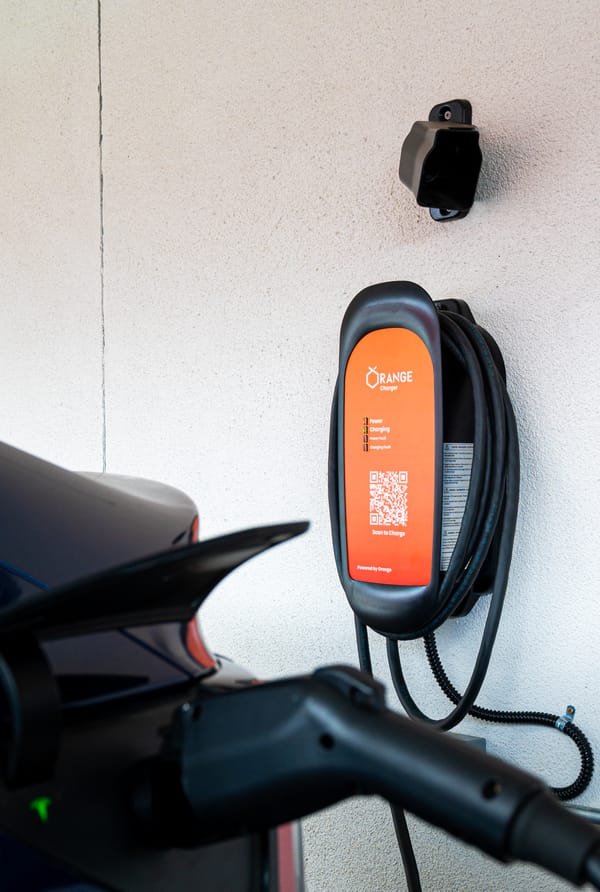
Three Quarters of Growth: What Orange Learned Building EV Charging for Multifamily
Context: A deep dive into Orange’s last three quarters—covering GTM execution, revenue growth, hardware challenges, and the unique dynamics of selling into multifamily properties. Focuses on business model design, utilization, connectivity, and why Orange’s approach is fundamentally different from traditional EVSE providers. Post Body: When we started