Zero to One Through Great Customer Discovery
Over the last several months, I've been helping several other founders who are early or have had to pivot from their original idea. Each time I encounter the same friction or resistance from founders, I have been there myself, facing the pushback of talking with customers and asking for money.
Customer discovery is probably the most essential part of building a business. Still, it is often misunderstood, and the processes around it are often not strong enough to hold each other accountable.
Too many founders speak to too few people and assume that their feedback is sufficient to build a business around. The problem is, this is neither true nor scalable. You need hundreds, if not thousands, of customers who have similar pain points that you can aggregate into a product. This means that customer discovery needs to be a process that collects data from multiple sources. Your job as a founder is to listen, understand, and aggregate that into a product that is compelling and creates value for the end customer, where the pain point is strong enough for them to pay a significant amount of money to have that problem solved, hopefully by your company!
Many startup founders I've spoken to over the past several months lack a straightforward, methodical process for aggregating data and unifying it into something useful. Often, listening to one or two customers or design partners to build a product. This results in a glorified free-consulting job for the design partner.
Mainly because many founders I've spoken to are also hesitant to discuss money early on in conversations, fearing they might scare off potential customers. Many startup founders I've spoken to over the past several months lack a straightforward, methodical process for aggregating data and unifying.
The founder's discovery is relatively simple, but it is a painful process of emailing, calling, and outreach that most technical founders dislike, simply because that's probably why they became technical.
You need a precise balance between:
- Technical understanding of what's capable
- What the customer is saying
- What you believe you're going to build
- The ability to execute on it
Meaning you still need someone to build the thing once you figure out what it is, but often, figuring out what to build is hard.
How many times have you heard "I want to start a company, I just have never had teh right ideas"? One, please don't start a company if you think the idea is what matters; it's the desire to solve real problems others haven't yet solved. It's going to be hard because if it were easy, someone would have done it already.
I want to spend some time demystifying the customer discovery process, also known as finding product-market fit. They're technically different things. But without one, you can't find the other.
A clear understanding of Product-Market Fit occurs when customers continually buy more of what you sell or keep asking for it. This is the best example of Product-Market Fit. You'll know it when you see it, because customers are clearly embracing what you've built. Because they love using it, it solves a real pain point and adds significant value to their workflows, lives, or businesses, or it's just really addictive. - Please don't become a drug dealer like TikTok or Facebook.
One of the key problems, though, is that customer discovery doesn't look the same for every company. Nor is there an easy playbook you can simply copy and paste for each business, because customer discovery is deeply ingrained in the industry, the customer, and the methods for engaging them.
Customer discovery looks very different for B2B and B2C companies, and even more so depending on if you're a research project (such as a nuclear reactor company, a fission company, or an AI company doing customer products), or if you're doing an AI company that's doing deep learning and models. Your customers are vastly different across these businesses, so customer discovery will look significantly different because the addressable markets themselves are distinct.
I'm not sure why so many MBAs believe they understand this, but when I observe them in action, they cannot develop a process that transforms the data they collect into a refined product. They are aware of this, but when I observe them executing, they have no means to develop a process that converts the data they collect into actionable insights to inform their decisions.
This is why technical capabilities and strong intuition are critical for turning that data into action.
Clear customer discovery should help answer these questions with excruciating levels of personal and intimate detail about the industry, the buyer, the problem, the user, and the overall market that you're addressing.
- Understanding your market.
- Understanding the problem.
- Understanding the economics.
- Validating your data for a product.
- Defining a clear GTM and repeatability.
- Understanding how your customers buy.
Step one: Identify a market opportunity. Define the pain points and talk to customers. Determine whether your customer is a buyer, a decision-maker, or involved in the buying process.
For B2C, it is as simple as running an ad. Some of the biggest brands you've ever heard of literally didn't even have a product when they first started advertising They had an idea of what they wanted to sell, but didn't have any supply chain/product figured out. All they had was an idea, and they marketed it based on strong intuition. B2C companies can do this because the feedback they receive from marketing tells them whether it's a good investment to actually start building the product.
Liquid Death is the stupidest company you could imagine. "It is canned water." Going to an investor and telling them you want to build a $100M business at the time of writing this, but all you're going to do is take water and put it in a fancy aluminum can. Oh, and your branding is dark and scary. Seriously, I want you to really understand how dumb this idea sounds when you say it out loud.
But the founder had understood the problem. He'd been to Warped Tour and seen monster cans labeled 'water' for the band members. Because no band member is downing Monster while they're singing their top songs in front of 10,000 people. There's a market of people who feel stigmatized for drinking water from plastic bottles, and who believe the overall environmental impact is significant enough that, if you could band behind it, people would buy your product in support of a message that is greater than the sum of its parts.
How did he do customer discovery? He spent a few thousand dollars on a video linked here that advertised Liquid Death in a way that made it stand out from the boring water companies he was competing with at the time, he had no product, just a cheap rendering that somebody had done for him off Fiverr of artwork he had created for the Cans, an actress who was in Hollywood looking for work, and a simple low-budget advertisement that he put online that racked up millions of views.
That was enough validation to invest in the first shipment, an order of Liquid Death. Canned still and sparkling water from the Austrian Alps by partnering with energy drink companies' existing supply chain. He was able to go to market cost-effectively and efficiently, and use the momentum from the Simple campaign to sell out.
Liquid Death's most valuable asset continues to be their ability to market to an audience that loves the differentiating factors of canned water with edginess that makes you feel like you're a part of a movement, not simply buying water off the shelf and seeing the trash pile up in our oceans. Seriously, they sell a tall-can of water for $3.25 USD.
Yet so many founders I talk to want to do this the other way around. They have this product they want to build, and they believe people will like it. Everything from canned peptides to new energy drinks. I can list the number of friends who have spent thousands, if not tens of thousands of dollars, on a product that just fills their garage because they never conducted proper customer discovery or understood what it took to bring it to market. Mentally, a business comprises several key components, and your role in customer discovery is to understand each part of the business and how it will operate to achieve success. The best companies know that all of them need to overlap cleanly to reach escape velocity.
Imposter syndrome or fear of failure.
This is probably the biggest source of pushback I see from founders, and sometimes from myself. I call it the failure to launch or the failure to make the phone call. I can tell you it's taken me years to overcome this initial inertia. At my first company, we had hit a dead end. We had talked to all the OEMs and realized:
- Autonomous cars were decades away
- OEMs were extremely difficult to sell to
- They weren't interested in a 3-person start-up out of a Sunnyvale building connected vehicle technologies when they themselves couldn't figure out how to build infotainment systems to compete with Tesla, and most management was too old to understand autonomous cars.
We hit a dead end; connecting cars wasn't that valuable. Over the next several months, I made numerous phone calls to various industries to determine what would make the most sense. We had a whiteboard in our Sunnyvale home living room that filled the entire wall, and on it we had ideas we thought sounded fun.
Personally, I'm still sad that we never built the trash-cleaning Wall-E that would have gone around the sides of the road and picked up trash. Something just sounds very fun about it. But it was clear that no market or go-to-market motion would make that product successful in 2017.
However, several phone calls made it clear that there is an interest in improving traffic management and innovation related to autonomous vehicles within cities. Therefore, after several calls to the cities of San Jose, Chicago, L.A., Miami, and Fort Lauderdale, Florida, we found that innovation teams in those cities were exploring products to optimize the flow of all types of vehicles. Some of these were:
- At the time, we learned that scooters were showing up everywhere, and a need to track them so they could better regulate scooter deployments throughout the city, to not end up with high messes of bikes and rideshare scooters everywhere
- The advent and acceleration of ride-sharing is pushing cabs and making it hard for public transit to compete.
- The fear was because at the time, the number of autonomous vehicle companies, including Tesla, was promising that AVs were a year away, that transit would change so drastically that it would become obsolete.
These fears helped us understand what our customers were making decisions about. Next, we had to know how our customers made decisions. I won't lie, this took us a lot longer and was a slow, painful process. If you had told me I was going to sell the cities and how hard it would be to sell because of the number of people involved in the buying process, I would have turned around and never done it. We don't do hard things because they're hard. We do hard things because we thought they would be easy. Sometimes the best advantage someone has to do something challenging is the ignorance of how difficult it really will be.
"Stay hungry, stay foolish" - Whole Earth Catalog.
I want to double down on this last point because, as you get older, it becomes more difficult. But as a 20-something out of college, your optimism often overpowers the pain points that will come ahead. The best founders maintain a level of childish optimism throughout their lives regarding ideas and challenges, without jading them into pushing off things that could be done because they have too much information.
Because of this customer discovery and the number of phone calls I made, many of which didn't lead to anywhere, we were able to aggregate around how we would go to market and get opportunities within those cities who were able to help us get to the next level, which is access to traffic lights, data, and the things we needed to build the product that became Lyt.
This is just one example that I personally have. I've done this several times now. Again, an Orange, realizing that sometimes the product we had wasn't correct, or pivoting and understanding what it took to actually get to market. Fundamentally, we still made bad decisions along the way because, as we grew, we had a rigid team that was not willing to learn from the feedback we were receiving.
Side note, people from corporate America generally suck at testing new ideas, validating them, and moving on. Most people believe their job is about executing an idea from start to finish. Because that's what they've been trained to do in their organizations. This is a massive problem I see: startup founders who have already had jobs at large companies with cultures that aren't like a start-up's.
Also, why were all the Magnificent Seven started by young 20-something-year-olds who have continued to learn and advance the startup mindset that allows them to execute quickly, explore the world, kick out ideas, and try new things? The number of mistakes they've made is greater than the number of successes. However, people are often afraid of making mistakes and/or learning that their idea is wrong due to ego or self-reliance, which causes them to ignore early signs and delay pivoting. By the time they hit a wall, it's too late.
One of the best examples of a B2B play that I've ever heard of in history, which created one of the wealthiest individuals on the planet, is Bill Gates' pitch to IBM. At the time, they were consulting on software solutions for other companies within the ecosystem of computer technologies or IT systems. They were dropouts, but they wanted to be part of the revolution that was unfolding during the 1970s and early 1980s. They had no idea what their actual product would be, and the industry was undergoing rapid change. IBM, which had been the lead player in information technology and computing for decades, had the opportunity to learn, pivot, and execute better than anyone else. However, as in actual history, the people at that stage were not rewarded in those companies for taking such risks, and therefore made a fatal error.
The reason is that these people have continued to learn that failure is not a big deal. In fact, in some cases, it is the best way to learn. One of my favorite movie quotes is, "A man often learns more from his failures than his successes. The trick in life is to not make a habit of them."
Bill Gates pulled off a remarkable move by simply partnering with IBM. This company had all the money, all the talent, and everything it needed to essentially build what Microsoft would become. He negotiated a deal with executives who lacked insight and were not rewarded for taking risks, which ultimately led to the handoff of a licensing agreement that made Microsoft the most valuable company in the world. This agreement, however, was overshadowed by their subsequent struggle to compete in a commoditized hardware market over the next 20 years, which ultimately led IBM to exit the market. We want to emphasize that IBM remains an exceptional company and has, over time, developed a core understanding of B2B and networking to create products used by many corporations today. However, they themselves missed out on becoming the next Apple or Microsoft simply by giving a 20-year-old access to a perpetual license to software developed for IBM hardware and giving that software a go-to-market (GTM) through IBM's brand and scale.
However, it is also worth noting that Bill Gates and the team at Microsoft did not recall a software product that became standard and ran IBM's computers for the next several years, as well as many other computers that entered the market at the time of this deal. Bill Gates's ability to understand the changing ecosystem and the opportunity at hand allowed him to negotiate an agreement before actually writing any code. In fact, his actual value was knowing the guy who had written the code, who was a passionate engineer but had no access to this business model, nor the capital needed to scale it.
The story goes that Microsoft bought the original BASIC software, which became a key product offering sold to IBM for the next several years, for $50,000. And with every subsequent computer sold, Microsoft charged a licensing fee for the software, making millions upon millions of dollars and allowing them to develop what became Microsoft's OS, which we still use to this day.
If you don't see the trend here, it's that some of the largest and most impactful companies have made their mark by trying to sell, negotiate, and learn about the market deeply before making an actual investment in the product. This meant they had the resources to continue on another day while they figured out how to get the most leverage from the opportunities in front of them.
I hope this is a helpful example to get your brain thinking about how you, as a founder or an executive, entrepreneur, or entrepreneur inside an organization, properly leverage resources to understand what you need to build based on customer discovery before you actually invest in creating it.
Exceptions to this concept.
Much in life is not black or white. This is an extremely valuable framework to consider when undertaking your next endeavor, and the most likely way to achieve customer discovery and product-market fit is to go out and talk to as many people as possible to identify opportunities you can leverage to build a business around.
There are exceptions to this rule, and many of the most prolific and great products we use every single day were not developed using this strategy.
I'm going to talk about two products that we know well in the Western world: Gmail and Slack. Two software tools that are used by many people every single day to communicate, and how they both became products, not because of an overall initiative from above, or a genius idea, or customer discovery, but because they were used by the end-user who was creating them to solve a problem that they faced every single day.
It is the exception to the rule. Suppose you are the ideal customer, and there are many people like you worldwide who have the same problem. You can build the proper tool over time that excels at solving that problem, and you have access to a way to scale it and get it to market. In that case, you can succeed without completing the first part of what we just discussed, which involves intensive outreach and customer discovery. Instead, you focus on the things you care about in the product, assuming that you are the norm. Now, there's an intentional risk associated with this, but it has worked out for many companies in the past, as exemplified by Gmail and Slack.
Let's start with Gmail. It's been around longer and is the fundamental way most people think of email, but it didn't start out that way. As Google scaled and grew, it hired many great software developers. You can learn more about Gmail's history, including how it was introduced into the Google ecosystem and later brought to market.
The Cliffs-Notes are simple: An engineer at Google was working on a product for himself to better manage the daily emails that came through between teams. He wanted a way to better message people, so he built Gmail for himself. He then let others start signing up on Google. People flurried all over the company to get access to this new tool. It caught the attention of the Google executives, who then quickly spun it out into a product as part of the Google Suites. This is a perfect example of not conducting customer discovery, but rather solving a problem that you face every single day, which many other people also experience. That your passion and execution are good enough to become something other people will cling to and use.
Many products often use this approach to grow silently within an organization. Facebook utilized academic institutions, while Gmail leveraged Google's internal needs to validate, define, and develop the product. By the time the public gained access to it, it was almost a fully featured and polished product. The feedback they received internally was a good generalization of the views of all other users outside the organization.
Next is Slack. Slack's story is even more interesting. During the early dot-com bubble and the early 2000s, a group of small founding developers was working on a video game world that ultimately flopped. During the launch attempt for this product, they built Slack internally to help them develop it. They themselves needed a better solution than in-line sharing in emails to manage the product's and game's assets, so they could communicate effectively and build what they thought would become a massive success.
The product they built internally to help develop the game that failed ultimately became their great success.
These are two exceptions to the above rule of customer discovery. While, like I said, the world's not black or white. These are exceptions and are rare in the reality of building businesses. In fact, most companies built this way (where the product is overhyped, spends too much time in development without talking to real customers at scale, and has a process for incorporating feedback into the product's decision-making) fail miserably. There are more examples of companies that attempt to do what we just discussed that fail than succeed. Just this last year, a few AI pins failed spectacularly by staying in stealth mode for too long, without customer feedback outside their bubble.
In fact, most companies built this way (where the product is overhyped, spends too much time in development without talking to real customers at scale, and has a process for incorporating feedback into the product's decision-making) fail miserably.
I want to point this out, as many people will cling to it, explaining that their idea is so good or that they understand it so well. I've yet to see this, but I know better how the market works out.
Lastly, bad advisors plague the start-up ecosystem like never before. People who have massive egos and think they know best because they have either been successful or have an inflated idea of themselves. They will often give young or new founders advice on their ideas, saying they understand them better than the person building or the person with the idea. That said, there are bad ideas, and that is just life, and many people shouldn't start companies; it's harder than people make it out to be.
At the same time, no one knows what will be a wild success. So teh advice on an idea is not practical, especially if you only have one data point. What great divers do is help people focus and run a great process to complete customer discovery so they can answer teh hard questions and build a strong intuition about what the company should do to get to the next step in building from zero to one.
Recent Writings

Could extended-range EVs encourage more car buyers to opt for full electric?
Problem: The fundamental idea here is that current EVs with 300-400-mile ranges still don't work for large SUVs that Americans actually buy. No actual pickup truck has been built that's comparable to an F150 or F250 capable of doing real work in the United States. This

A Founder’s Reflection of 2025
A founder’s reflection on leaving Orange, the collapse and rebirth of energy markets, and why AI and infrastructure are entering a new phase in 2026.
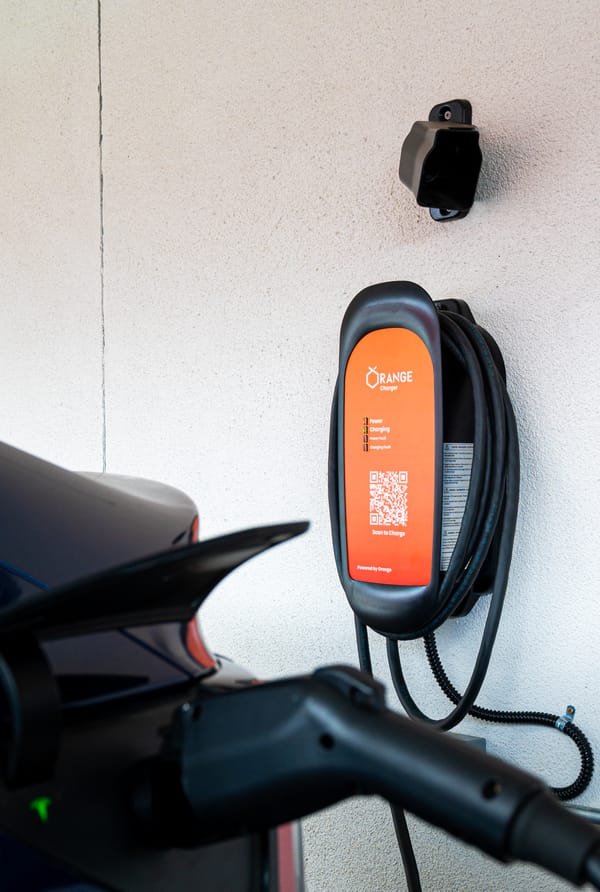
Three Quarters of Growth: What Orange Learned Building EV Charging for Multifamily
Context: A deep dive into Orange’s last three quarters—covering GTM execution, revenue growth, hardware challenges, and the unique dynamics of selling into multifamily properties. Focuses on business model design, utilization, connectivity, and why Orange’s approach is fundamentally different from traditional EVSE providers. Post Body: When we started